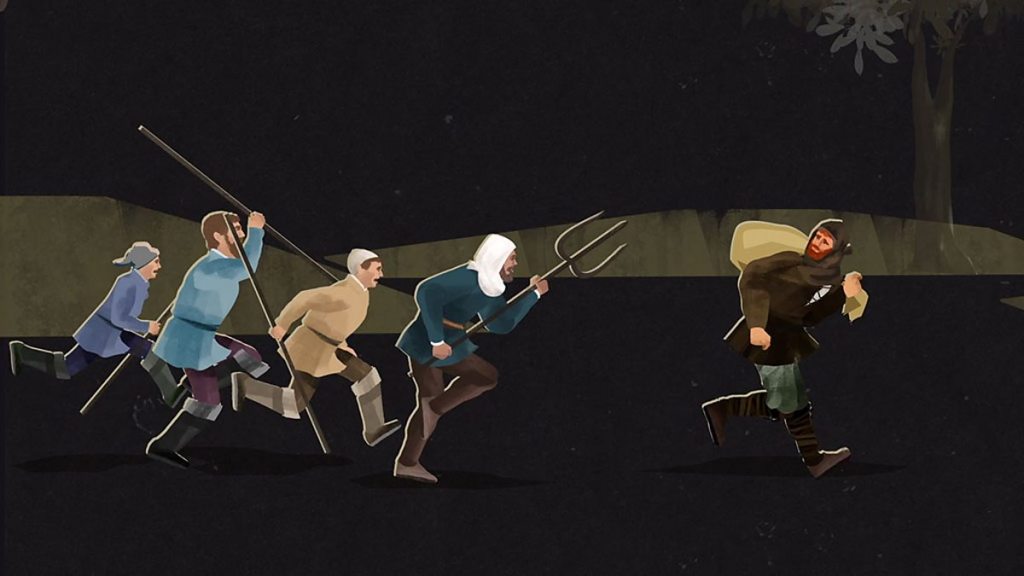
Source of picture: BBC, https://www.bbc.co.uk/bitesize/guides/zqsqjsg/revision/2
When thinking about the modern day’s criminal offences, I stumbled upon some questions. Suppose I do damage to a person:
- Am I committing a crime against the interest of an individual or the interest of the state?
- If so, will it be fair if I merely compensate the hospital fees to the injured person till they recover to the original state before things happened?
- If such compensation is considered suffice and the dispute seems settled, what explains the creation of the abstract term called “criminal liability” that stills keep me accountable before the State?
I believe you would be as surprised as I did. But back in ancient Anglo-Saxon times, around 600 A.D., mere compensation to the victim was what the convicted offender must do to discharge their criminal responsibility. This is famously captured in the observation of Henry Sumner Maine:
‘Now the penal Law of ancient communities is not the law of Crimes; it is the law of Wrongs, or, to use the English technical word, of Torts. The person injured proceeds against the wrong-doer by an ordinary civil action, and recovers compensation in the shape of money-damages if he succeeds […]’
HENRY SUMNER MAINE, ANCIENT LAW 358 (Charles M. Haas ed., Beacon Press 1963) (1861) (emphasis in original).
This interestingly reveals the private nature of early corrective justice. That the victim shall pursue the justice on their own and the injury was compensated in the shape of money.
Simple and civil as though it may sound, the matter turned complicated when there existed a power imbalance or non-negotiable terms between two sides. What happened when such situations occurred? Particularly in England, when two parties cannot agree upon the amount, the King would then get involved in the case. The King would impose additional tariffs depending on the level of the injury or the social status of the offender. ‘A damaged bone, for example, was worth four shillings, and an eye worth fifty’.[1] The money, then, went into the hands of the King.
Another problem also arises. The private settlement between two parties alone does not have deterrent or punishment effect.[2] Such belief that fair compensation to equal harm may perpetuate the idea that it is alright to initiate a criminal act as long as somebody pay the compensatory money, rather than preventing them from happening from the beginning. This threatens the social harmony, security and prosperity that any community goes after, which invited the involvement of the third party in criminal justice – the State. Criminal law started to shift from something ‘in the hands of individuals’ to something regulated and controlled by the state.
This helps shed light on why the substantive criminal law today is described as the list of offences that are prescribed by the State. Offenders are those who inflict harm upon the interests protected by the State.
References:
[1] The Hon T.F. Bathurst, ‘A Short History of Criminal Law’ (2021) The Journal of the NSW Bar Association – Bar News 54, 54.
[2] See M. Stuart Madden, ‘The Cultural Evolution of Tort Law’ (2005) 37 Elisabeth Haub School of Law Faculty Publications 831, 834.
 Duck Learns Law
Leave a Reply